
If Property Listings Become Free, What Exactly Are Agents Paying Portals For?
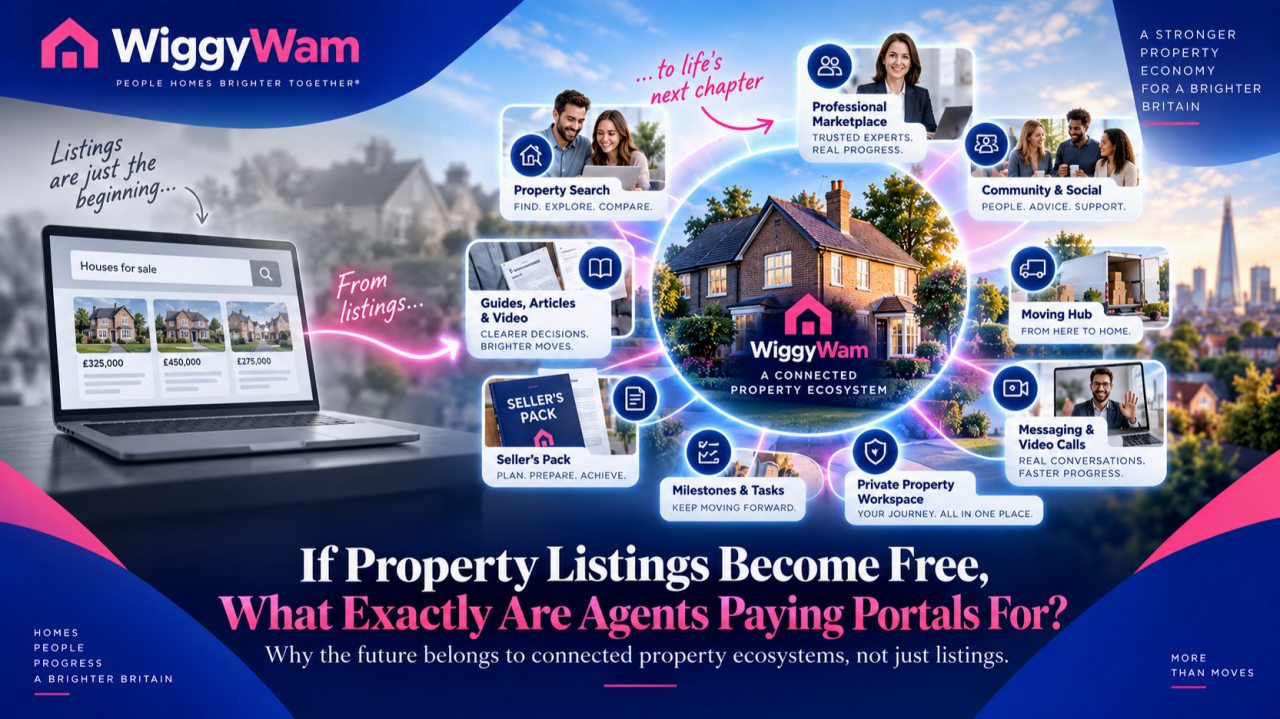
AI is changing the economics of property discovery, but the real opportunity is much bigger than creating another free portal. What if the property industry stopped paying simply to display homes and started investing in an entire ecosystem that connects people, professionals and property throughout their lives?
For more than twenty years, estate agents have paid substantial sums to advertise properties on portals because that is where the buyers are. The portals built enormous audiences, agents supplied the properties and consumers became accustomed to starting their search in the same familiar places. It has been an extraordinarily successful business model, but artificial intelligence is beginning to raise some uncomfortable questions about how much longer property discovery alone can justify the prices agents are paying.
We are already seeing a new generation of property-search platforms emerging, promising AI-powered discovery, conversational search and free property listings. Some are gathering information directly from estate agents' websites rather than relying exclusively on traditional property feeds. Others are beginning to explore the transaction itself, recognising that finding a buyer is only the first part of a much longer and considerably more complicated journey.
These developments are interesting, but they also expose a much bigger question. If technology makes property listings increasingly easy to discover, aggregate and display, why would the industry continue paying enormous sums simply to make those listings visible?
And if the listing itself is becoming less valuable as a standalone product, what should replace the traditional portal business model?
The high street never charged for window-shopping
Imagine walking down your local high street, looking through the windows of estate agencies, mortgage brokers and solicitors. You can see the properties, discover the businesses, compare what's available and decide which offices you want to visit. Nobody charges those businesses every time somebody walks past and looks through the window.
The internet developed differently. Portals brought property listings together, attracted enormous audiences and made searching for a home considerably easier. That was genuinely valuable, particularly when creating a comprehensive national property search was technically difficult and expensive. But over time, access to that audience became something agents increasingly felt they couldn't operate without, and the cost of being visible became another substantial overhead.
Artificial intelligence has the potential to change that relationship. It can help people search using ordinary language, interpret complicated preferences and bring together information from different sources. A buyer might want a detached house within thirty minutes of a particular workplace, with a south-facing garden, room for an extension and good transport links. Instead of repeatedly adjusting filters and searching several websites, they can increasingly describe what they want and allow technology to do much of the searching.
That doesn't mean established portals will suddenly disappear. Their brands, audiences and accumulated data remain valuable. But it does mean agents have a legitimate reason to question whether the traditional portal proposition will remain as distinctive as it once was.
When the technology needed to discover and present property becomes more widely available, charging ever more simply to display that property becomes a harder proposition to defend.
Why are we still building solutions to individual problems?
What interests me most about the latest wave of property technology is how much of it continues to focus on individual parts of the same problem. One business develops a better search engine. Another introduces upfront property information. Another creates a digital transaction platform. Another builds a professional directory or an AI assistant.
Each may solve a genuine problem, but the industry already has an extraordinary collection of disconnected systems. Adding another specialist application doesn't necessarily make moving home any easier, particularly when the consumer is still expected to navigate between different platforms, repeatedly provide the same information and chase different professionals to discover what's happening. The problem isn't a shortage of technology. It's the absence of a genuinely connected property environment that brings everything together.
That distinction is important because a home move isn't simply a property search followed by a legal transaction. People need information and professional guidance long before they decide to move. They need help finding the right property, arranging finance, preparing their existing home, understanding the transaction and coordinating the people involved. Once they've moved, they still need services, advice and a community.
Yet we've built an industry in which almost every one of those requirements is treated as a separate commercial opportunity, usually involving another website, subscription, application or intermediary. Surely we can do better than that.
WiggyWam has already built something fundamentally different
This is precisely why we took a different approach when building WiggyWam. We didn't start with the idea of creating another property portal and then gradually adding features as the market demanded them. We started by looking at the entire relationship people have with property and asking what a genuinely connected UK property ecosystem would need to provide.
The result is a platform that brings together a Property Portal, professional Marketplace, dedicated property social network, communities and forums, articles, videos, podcasts, Seller's Packs, the Moving Hub and private Property Workspaces. These aren't separate businesses that happen to share a brand. They are parts of a wider environment designed to support people before, during and after a property transaction.
Consumers can search for property, discover professionals and tradespeople, explore their expertise, follow their content, participate in discussions and build relationships with the people who may eventually help them move. Estate agents can showcase their properties and businesses while developing their own audiences. Solicitors, brokers, surveyors and other professionals can establish their presence within a dedicated UK property community rather than relying entirely on traditional advertising and referrals.
When somebody decides to sell, the Seller's Pack helps bring property information and preparation forward rather than waiting until a buyer has been found. Once a transaction begins, the Moving Hub provides dedicated dashboards for the people involved, supported by milestones, tasks, messaging, video calling and private Property Workspaces - all purpose built without the need for 3rd party integrations. It creates somewhere for the move itself to live without requiring every professional to abandon the specialist systems they already use. It takes minutes to get set up and there are no hefty overheads.
And when the keys finally change hands, the consumer doesn't disappear from the platform. They remain a homeowner, perhaps a landlord, an investor or somebody who will eventually move again. The Marketplace, community and professional content continue to give them reasons to return.
That breadth is what makes WiggyWam different. We aren't simply adding AI to property listings or creating another digital conveyancing tool. We've built the foundations of an entire property ecosystem in which discovery, professional relationships, preparation, transactions and ongoing homeownership can exist together.
While much of the emerging competition is still concentrating on individual elements of that journey, WiggyWam has already brought those elements together within one platform. The challenge now is scaling participation, strengthening the network and demonstrating what a genuinely connected experience can deliver.
Stop renting your audience
There is another reason estate agents and property professionals should be paying attention. The way people discover businesses online is changing rapidly. As AI increasingly interprets conversational searches and presents selected information and recommendations, businesses can no longer assume their websites, listings or content will always be what the consumer sees first.
For professionals who have spent years investing in websites, search rankings, advertising and expensive portal subscriptions, that introduces another layer of uncertainty. Being excellent at your profession doesn't automatically mean an algorithm will introduce you to the next person who needs your services.
The answer isn't to abandon established advertising channels overnight. It's to stop depending on them exclusively and start building something of your own.
An estate agent who publishes useful local-market insight, answers questions and remains connected to previous buyers and sellers is developing an audience that extends far beyond their current listings. A mortgage broker explaining changes in lending, a solicitor sharing practical guidance or a tradesperson demonstrating their expertise can do exactly the same.
WiggyWam gives those professionals somewhere to build that presence within a dedicated UK property environment, where their profiles, content, services and participation can all contribute to ongoing relationships. Rather than paying repeatedly to be discovered by people who may already know them, professionals can become part of a community that has reasons to remain engaged throughout the property journey.
And because the platform brings together far more than property search, those relationships have opportunities to develop long before somebody becomes a lead and continue long after a transaction is completed.
One ecosystem, rather than another collection of subscriptions
There is also an economic argument here that the industry cannot afford to ignore. Property professionals already pay for numerous systems, subscriptions, advertising channels and specialist services, many of which operate independently despite serving the same customers and transactions.
We have deliberately taken a different approach. WiggyWam's professional membership is built around a very low, flat monthly subscription that provides access to the relevant parts of the wider platform. Estate agents can showcase their properties, build their professional presence, publish content and participate in the ecosystem. Conveyancers and brokers have their own professional profiles, Marketplace presence and Moving Hub capabilities.
The objective isn't to persuade professionals to purchase another expensive piece of technology. It's to give them a much broader environment in which they can promote their expertise, develop relationships and collaborate around the actual home-moving process.
That also explains the thinking behind the Maverick Movement. We believe the industry should be measuring success by the quality of the experience and the number of transactions that actually reach completion, not simply the number of enquiries generated, applications installed or administrative tasks digitised. Finding the buyer matters, but getting that buyer and seller successfully to completion matters considerably more.
The next battle is for the relationship
The arrival of more free and AI-powered property-search services should be welcomed because competition can challenge costs and encourage innovation. But if the industry's response is simply to create an endless succession of cheaper portals, we'll have missed the much bigger opportunity.
The next generation of property technology shouldn't be judged solely by how many properties it can display or how sophisticated its search engine becomes. It should be judged by how effectively it connects the people, information, expertise and services involved in property, how much unnecessary work it removes and whether it gives consumers and professionals a better experience.
That is the scale of what we are building with WiggyWam. A dedicated UK property ecosystem that connects the Portal, Marketplace, social network, professional content, Seller's Packs, Moving Hub and Property Workspaces, giving people a reason to remain connected to property and the professionals who serve them throughout their lives.
For years, the industry has spent enormous sums paying to be visible at the precise moment somebody wants to move. Perhaps the opportunity now is to create somewhere people want to be before they decide to move, somewhere that helps them when they do, and somewhere they have every reason to return to afterwards.
Because if property listings eventually become free, the question isn't simply what agents should stop paying for. It's what they should start building instead. The future of property isn't another portal. It's an entire ecosystem built around the people who use it.
Whilst everyone else is talking about what is needed. WiggyWam's powerful niche to the UK property eco-system is already built. Don't get left behind.
Andrew Glendinning Sarah Lim Iain McKenzie Dan Wass Gareth Griffiths James A. Brown Frances McCann Richard Ingle Scott Devereux Janet Bedford Mandy Wilcock Adam Evetts Darren Ditchburn Caroline Domanski MBE Steven Bartlett Touker Suleyman Adam Noonan Gareth Samples
COM_EB_SUBSCRIPTION_FORM_DESC
